
First Aid for Dogs and Cats With Heat Stroke
As temperatures rise across Australia, so does the risk of heat stroke in dogs and cats. Heat-related illnesses can become life-threatening within minutes especially for pets left in hot environments or exercised during warm weather.
Knowing the early warning signs and what to do can save your pet’s life.
What Is Heat Stroke in Dogs and Cats?
Heat stroke (also called heat exhaustion or hyperthermia) happens when your pet’s body temperature rises dangerously high and it can no longer cool itself effectively. Dogs are especially at risk because they can’t sweat like humans - panting is their main cooling method. Cats can suffer from heat stroke too however it's less common.
A normal dog’s temperature is between 38.3–39.2°C. Heat stroke occurs above 41°C. This condition can cause organ failure, seizures, or even death if not treated immediately.
Stages of Heat Stress in Pets
- Heat Stress: Panting, thirst, mild fatigue
- Heat Exhaustion: Vomiting, diarrhoea, weakness
- Heat Stroke: Collapse, seizures, organ failure
Symptoms of Heat Stroke in Dogs and Cats
Early Signs of Heat Stroke Include:
- Excessive panting or drooling
- Bright red gums and tongue
- Rapid heart rate
- Restlessness or anxious pacing
Advanced Symptoms:
- Vomiting or diarrhoea
- Blue or grey gums
- Collapse or weakness
- Seizures or disorientation
- Loss of consciousness
If you suspect your pet has heat stroke, we recommend immediate first aid at home followed by an urgent visit to your local vet or emergency hospital (after hours).
Common Causes of Heat Stroke in Dogs
- Being left in a hot car, even for a few minutes
- Overexertion on warm days (running or playing)
- Poor ventilation or confined spaces
- Hot pavement walks
- Flat-faced breeds (like French Bulldogs or Pugs) struggle to regulate body temperature
Can Cats Get Heat Stroke?
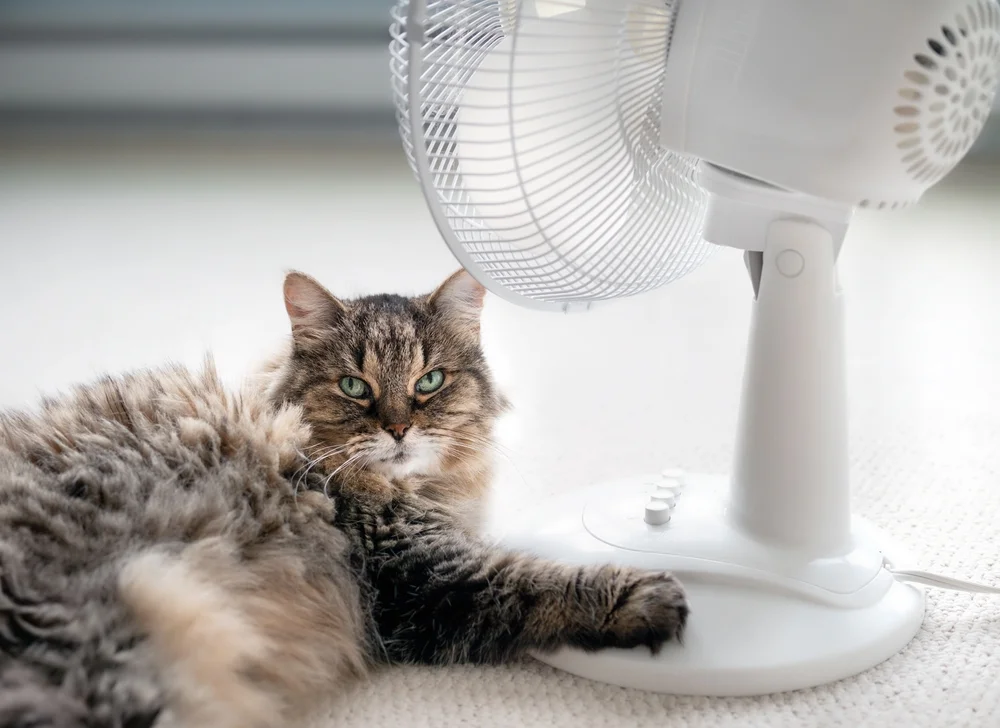
Yes, cats can get heat stroke. While they are more likely to find cool hiding spots, they can still overheat, especially if trapped indoors without ventilation or left in direct sun. Long-haired breeds and senior cats are more susceptible to heat stroke.
First Aid for Heat Stroke
What To Do If You Suspect Heat Stroke:
- Move your pet to a cool, shaded area immediately.
- Cool them with water:
- Use room-temperature NOT iced water to avoid hypothermia
- Soak a towel in cool water and drizzle or sponge water over your pet concentrating on the head, stomach, neck, inner thighs and pads of the feet.
- Wrap your pet in a cool wet towel, continuing to replace the towel with a cool, wet one. Don’t leave the towel on your pet as this can heat up.
- For larger pets, gently hose or bathe with cool water, followed by cool towels applied to the head and stomach.
- You can also use a fan for airflow.
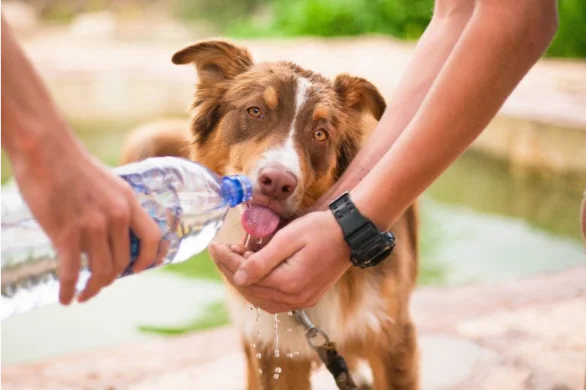
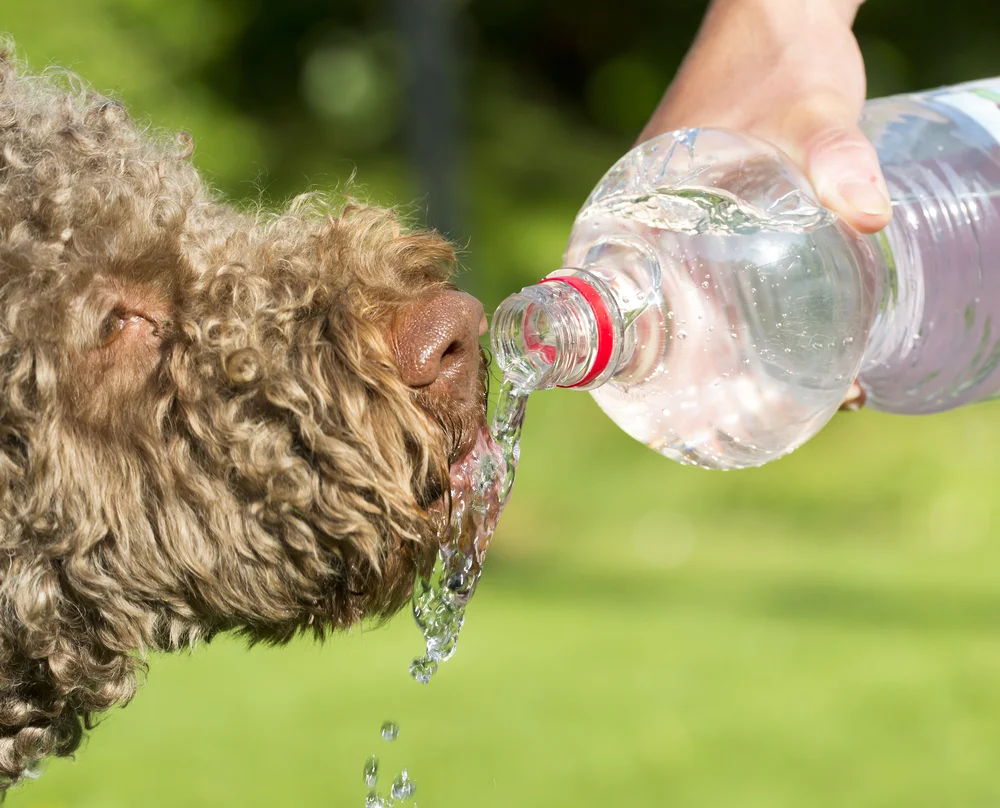
- Let them drink small amounts of cool water, but don’t force it.
- Call your nearest vet or emergency hospital.
Even if your pet seems to recover, heat stroke can have lasting internal effects so vet care is critical.
When to Seek Emergency Vet Care
Always seek emergency veterinary attention if:
- Symptoms are severe or worsening
- Your pet collapses, vomits, or has seizures
- There’s no improvement after cooling for a few minutes
Our emergency vet hospitals are open after hours and equipped for critical cases.
How to Prevent Heat Stroke in Pets
- Avoid exercise during the hottest parts of the day (walk early morning or late evening)
- Never leave pets in parked cars, even with windows cracked
- Provide constant access to cool, fresh water
- Use fans or cooling mats
- Groom long-haired pets to prevent heat retention
- Watch high-risk pets: flat-faced breeds, overweight pets, puppies, seniors, and those with medical conditions
At What Temperature Do Dogs or Cats Overheat?
Dogs and cats can start to suffer heat stress when the temperature climbs above 25°C, especially with humidity. Cars, concrete, and enclosed spaces can become dangerous even faster.
Cars can reach 40°C+ in minutes, even on mild days.
FAQs
1. Can dogs get heat stroke even in the shade?
Yes - especially if it's humid, they’re overexerted, or have underlying health issues.
2. How long does heat stroke recovery take?
Mild cases may recover in 24–48 hours, but severe cases can take weeks with vet supervision.
3. Can puppies get heat stroke more easily?
Yes. Puppies, seniors, and flat-faced breeds are all at high-risk of heat stroke.
4. What should I do after vet treatment?
Limit activity, provide a cool environment, and follow any post-care instructions from your vet.
Heat stroke is a fast-moving emergency, but with quick action and the right knowledge, you can protect your pet.
If in doubt, call your nearest emergency vet for advice.
You can read more of our specialist veterinary news and stories here.
For referring vets, please use our online referral form to submit a case enquiry.
You might also be interested in

Zorro The Dog Who Survived Drowning
Discover Zorro's incredible survival story on the Animal Referral & Emergency Network's blog. Learn how our expert team saved a drowning dog's life.

Toad Poisoning in Dogs & Pets | Symptoms & Treatment | AREN
Discover life-saving tips on Toad Poisoning in Dogs & Pets, emergency first aid, symptoms and treatment from the Animal Referral & Emergency Network.
.jpg)
What To Do If Your Dog Is Stung by A Bee: Symptoms & Treatment
Has your dog been stung by a bee? Learn how to spot mild vs. severe symptoms, what to do immediately for treatment, and when you need to see a vet for a bee sting.
