
Spontaneous Pneumothorax in Dogs
A 9-year-old, male, Jack Russell Terrier was presented to our emergency and critical care department with sudden shortness of breath (acute severe dyspnoea).
Upon admission, our emergency and critical care team provided him with initial medical care, including oxygen supplementation, intravenous fluid therapy and preliminary blood and blood gas analysis to diagnose the cause of his condition.
In addition to this, we conducted a small animal thoracic radiography which identified a large volume of pneumothorax (collapsed lung). Using this finding, we proceeded to remove the excess air from the lung space (thoracocentesis) that only resulted in a temporary improvement. Our Dandenong veterinary team, aided by local analgesia, placed a thoracostomy tube into the lung to allow for draining.
Despite this, frequent drainage was necessary and large volumes of air were collected on each occasion. A CT examination of the thorax was performed, identifying residual pleural air and a localised accumulation of air in the dorsal aspect of the left cranial lung lobe.
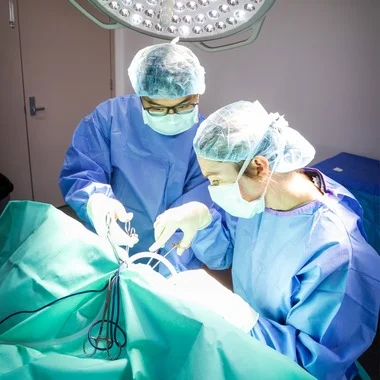
The VRH veterinary surgery department performed a left intercostal thoracotomy which discovered a large, air-filled bulla on the cranial margin of the cranial portion of the left cranial lung lobe. The bulla filled with inspiration and a defect, approximately 3mm in length was leaking oxygen and ventilated anaesthetic gases. Partial lung lobectomy was performed, the thoracostomy tube was retained and the thorax closed routinely. The dog recovered well and was discharged on the second postoperative day.
What causes a spontaneous pneumothorax?
Cystic/bullous lung disease is a common cause of spontaneous pneumothorax in dogs. This includes pulmonary cysts, blebs, bullae and pnaeumatocoeles.
Cysts are congenital or acquired and are lined by respiratory epithelium. Blebs are accumulations of air beneath the visceral pleura but outside the pulmonary parenchyma.
Bullae result from rupture and coalescence of alveoli secondary to emphysema, inflammation, trauma, or idiopathic causes. Pneumatocoeles are accumulations of air in other lesions, such as tumours or abscesses. Many cases have more than one lesion, with more than half of cases in one study having bilateral lesions.
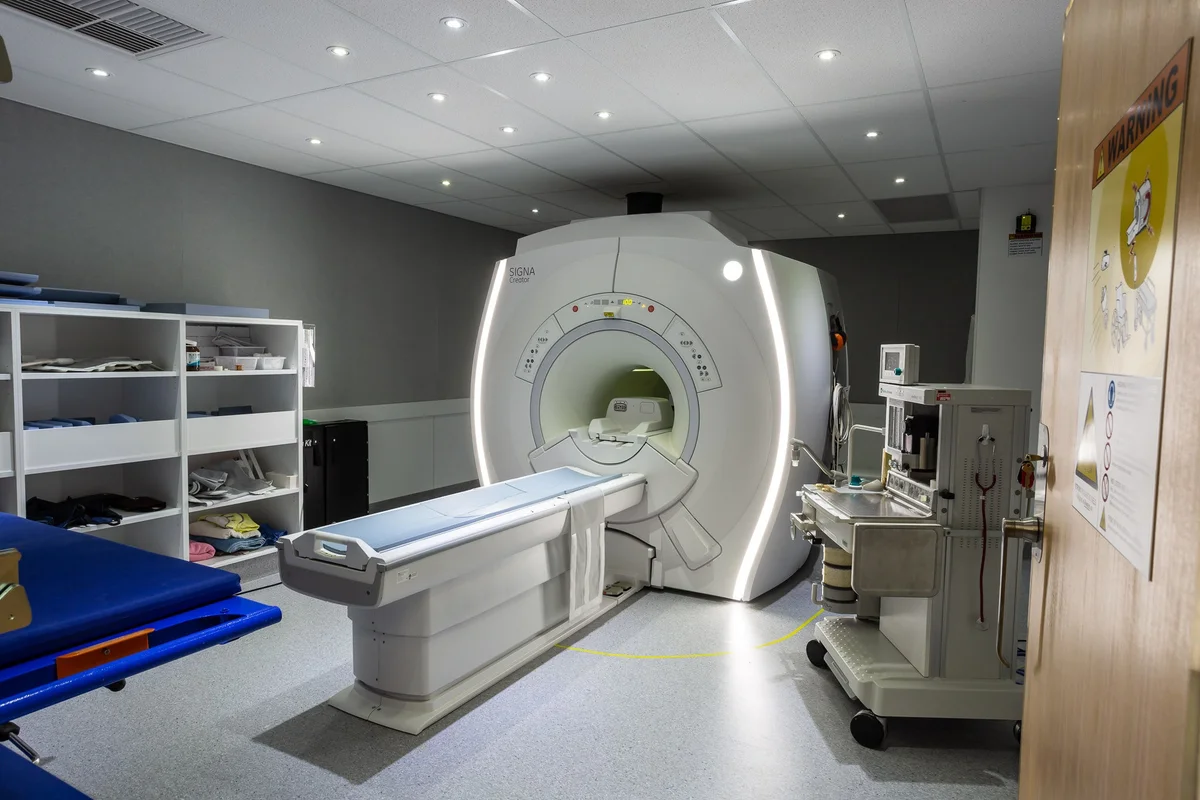
Pre-operative imaging is particularly valuable as it not only allows a provisional diagnosis, but it also directs the surgical approach. Cysts or bullae may be identified on radiographs, but radiography is significantly less sensitive than CT in identifying lesions. In one study, 4 of 17 lesions were identified radiographically, compared with 13/17 using a CT scanner.
Patients with spontaneous pneumothorax secondary to pulmonary cystic or bullous disease rarely respond to conservative management. Surgical excision is generally effective in controlling the leakage of air, but the ultimate prognosis is dependent on controlling the primary cause.
The prognosis with bullous emphysema, for example, is guarded to poor, as the bullae are often numerous and continue to develop post-operatively. The prognosis after excision of solitary lesions is generally good, although follow-up thoracic imaging at regular intervals has been recommended to monitor for recurrence.
How is spontaneous pneumothorax treated?
Such as in the patient example above, several surgical approaches may be taken to the thorax to excise cysts and bullae. Intercostal thoracotomy is effective for single or localised lesions, but for more extensive or bilateral disease, a median sternotomy may be necessary. Alternatively, thoracoscopy has been reported for partial lung lobectomy to address multiple lesions.
Looking for additional information info on common pet illnesses and diagnoses?
For referring vets, please use our online referral form to submit a case enquiry.
You might also be interested in
Allergies In Dogs | Causes, Symptoms & Treatment
Discover the causes, symptoms, & treatments for allergies in dogs, from itchy skin to food sensitivities. Learn how to keep your pet comfortable & healthy.
Garden Snails & Slugs Pose Life-Threatening Risks To Dogs & Humans
Learn about garden snails in your home, if they are poisonous to dogs & humans, symptoms and treatments from expert Veterinarians.
.jpg)
Arthritis In Dogs | Causes, Symptoms & Treatment
Learn about arthritis in dogs, including its causes, symptoms, and diagnosis. Discover ways to manage & improve your dog’s comfort and quality of life.
