
Understanding and managing ear infections in dogs
Ear infections are a common health issue in dogs, causing discomfort and potentially serious complications if left untreated. Here’s what you need to know about the causes, symptoms and treatment options for ear infections in dogs.
What causes ear infections in dogs?
Also known as otitis externa, ear infections can affect dogs of all breeds, sizes and ages. A healthy ear should be clean, dry and odourless. Regular ear care is the best way to prevent infections and keep the ear healthy all year round.
Here are a few issues that might result in an ear infection for your dog:
Allergies: Environmental and food allergies can cause inflammation and excess wax production in the ear canal, which can lead to secondary infections.
Moisture: Excess moisture from swimming or bathing can create an ideal breeding ground for bacterial and yeast growth. This is more commonly an issue with contaminated water sources, like lakes, or if the ear was already inflamed beforehand.
Foreign bodies: Things like grass seeds can become lodged in your dog’s ear canal, causing irritation and infection.
Ear mites: These parasites cause intense itching and inflammation in dogs’ ears, usually leading to an infection.
Underlying health issues: Conditions like hypothyroidism or autoimmune disorders can predispose some dogs to ear infections. Dogs that have anatomically very narrow ear canals (e.g. shar pei’s) or have had chronic ear infections in the past will be at higher risk for developing ear infections.
What are the symptoms of an ear infection in dogs?
Head shaking or tilting
Constant scratching at the ears
Redness or swelling in the ear canal
Discharge or a foul smell
Pain or sensitivity when touching the ears
Hearing loss or balance issues.
Symptoms of ear infections in dogs can vary depending on the type of infection (e.g., bacterial, yeast, etc.), degree of inflammation and location (whether it is just the external ear canal or if it is affecting the middle ear), so it's essential to monitor any changes in your dog’s behaviour.
Different types of ear infections
Outer ear infections (otitis externa): These infections mostly happen in the ear canal and are the most common type of ear infection in dogs.
Middle ear infections (otitis media): These occur when an outer ear infection spreads deeper inside, beyond the ear drum, which can lead to more serious complications.
Inner ear infections (otitis interna): This occurs when the innermost part of the ear and its internal structures become affected, tending to impact balance and hearing.
Breeds with the highest rate of ear infections
How to treat a dog’s ear infection
Ear cleaning: Thoroughly clean the ear canal to remove gunk and discharge.
Medications: Get topical or oral antibiotics, antifungals or anti-inflammatories to treat the infection and reduce inflammation, as prescribed by your vet for your dog’s specific needs.
Address the underlying causes: Manage any underlying conditions, like allergies, to prevent recurring issues.
The AREN Network’s veterinary specialists can diagnose and treat your dog’s ear infection – no matter the severity – with most cases resolving within a few weeks with proper care. With a tailored treatment plan in place, you can trust that our vets will help your dog make a full recovery.
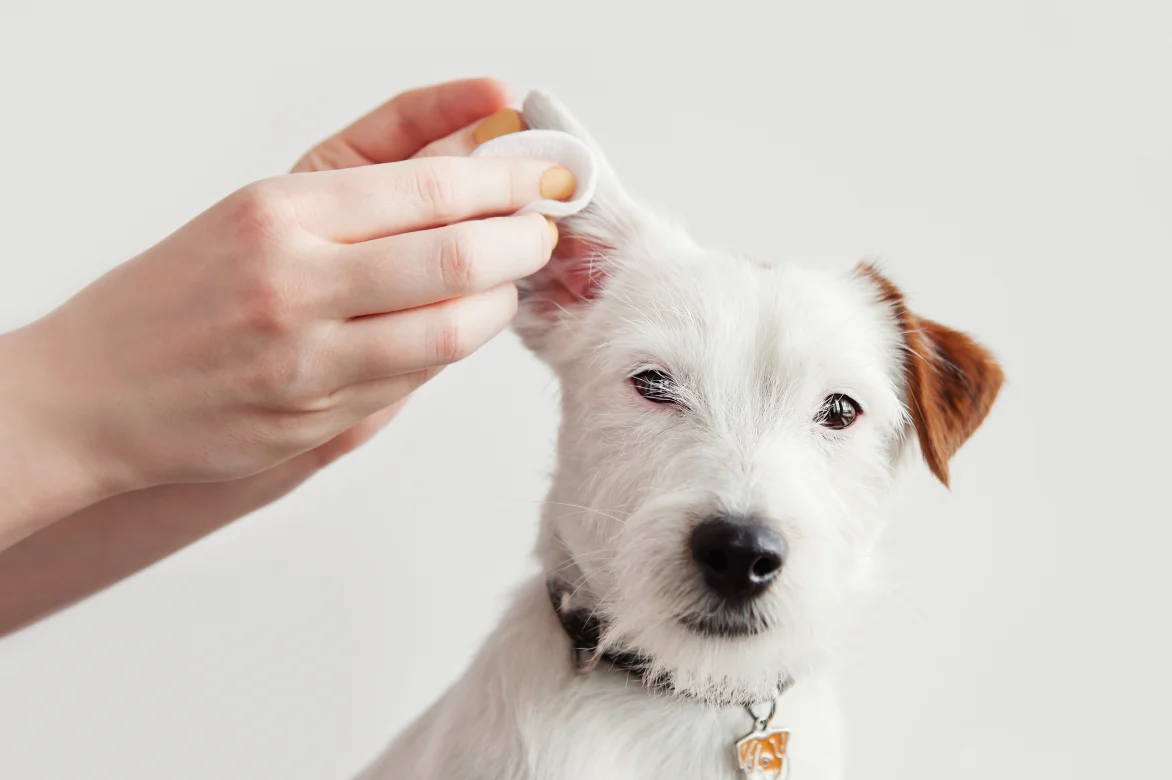
How to clean your dog’s ears safely
Regular ear cleaning is a key step in avoiding infections. Here’s a simple six-step guide to safely clean your dog’s ears:
- Use a vet-recommended ear cleaner, cotton pads or tissue and a towel.
- Have your dog sit or lie down comfortably.
- Gently lift the ear flap and use the ear cleaner according to the directions.
- Gently massage the base of the ear to distribute the cleaner and loosen any build-up.
- Use a cotton pad or tissue to wipe anything that might remain. Don’t use cotton swabs/buds, as these can push build-up further into the ear canal.
- Give your pet treats and praise to make the experience a positive one.
Importance of regular ear cleaning
Regular cleaning will help reduce build-up and moisture, which will, in turn, lower the risk of infection. It’s best to set up a routine according to your vet’s recommendations, so don’t be afraid to ask them how to clean your dog's ears safely and effectively.

When to see a vet for ear problems
It’s best to seek advice from a veterinary service if you notice any ongoing symptoms or if your dog seems to be getting recurring ear infections. As always, early intervention can help prevent complications and ensure your dog is happy and healthy.
By staying vigilant and regularly caring for your dog’s ears, you can help keep them healthy and avoid nasty infections.
You can read more of our specialist veterinary news and stories here.
For referring vets, please use our online referral form to submit a case enquiry.
You might also be interested in
Diaphragmatic hernia in a cat
Dr Charles Kuntz, Specialist Surgeo, explains the procedure for repairing a peritoneal pericardial diaphragmatic hernia in a one-year-old cat.
Gastric Dilation & Volvulus Syndrome (GDV) In Dogs
Learn about how to recognise Gastric Dilation in dogs including symptoms, treatment & diagnosis from the experts at AREN.
Spinal Disease In Dogs - The Uncommon Facts
Explore uncommon facts about spinal disease in dogs. Learn about sign and symptoms, pain management, treatment options, including surgery and conservative management.
