
IVDD in Dogs: Symptoms, Grades, Causes & Treatment
By Dr Jade Ridsdale BSc BVMS
Web Vet
This month is IVDD Awareness Month, and unfortunately at Animal Referral & Emergency Network (AREN) we see too many dogs with this debilitating spinal disease. IVDD can affect any dog, with signs ranging from mild back or neck pain to sudden onset severe pain, weakness or paralysis. Some dogs deteriorate quickly, so recognising the warning signs and seeking veterinary advice early can make an important difference. This guide takes you through the key facts about IVDD, including the common symptoms, neurological grades, diagnosis and treatment options, to help you recognise when your dog may be in trouble.
What is IVDD in Dogs?
IVDD, or intervertebral disc disease, occurs when one or more of a dog’s intervertebral discs undergo degenerative change. These shock-absorbing structures sit between the vertebrae of the spinal column, helping to stabilize the spine and allow controlled movement.
Degeneration can begin early in life and as a dog ages, an affected disc may bulge or rupture. This is called intervertebral disc herniation (IVDH). Disc material can then compress, bruise and inflame the spinal cord and nearby nerves, causing pain and neurological dysfunction.
There are two broad patterns seen with IVDD. Type I usually involves sudden disc rupture and is more common in smaller, chondrodystrophic breeds. Type II generally involves gradual disc bulging and is more often seen in larger, older dogs.
Without timely treatment, some dogs can develop permanent weakness, paralysis or loss of bladder function.
Signs & Symptoms of IVDD
Symptoms of IVDD depend on the location and severity of the affected disc. They may appear suddenly or worsen gradually. Common signs include:
- behavioural changes, such as not wanting to jump or hiding
- intermittent or consistent pain
- yelping, crying, trembling or discomfort when touched or picked up
- an arched back, hunched posture or tense abdomen
- reluctance to move, climb stairs, jump on furniture or get into the car
- wobbliness, weakness or lameness in one or more legs
- dragging or scuffing the feet, or knuckling of the paws
- inability to stand or walk
- loss of bladder or bowel control
- dogs with IVDD in the neck may be reluctant to turn or lower their head and can show weakness or lameness in one or both front legs.
Early Signs of IVDD
Early signs can be more subtle. A dog may become quieter, avoid furniture or stairs, move stiffly, hold their head lower, tense or cry intermittently when touched or playing, or seem uncomfortable without an obvious limp. Back pain can also be mistaken for abdominal pain, so reacting or tensing when touching their abdomen may be a sign.
Any unexplained change in movement, posture, behaviour or willingness to exercise should be checked by a veterinarian, particularly if signs are worsening, or not improving with a few days of rest.
When Is IVDD an Emergency?
Seek emergency veterinary care immediately if your dog shows signs of significant pain or any neurological signs, as these could indicate more severe IVDD that needs urgent intervention. Neurological signs include an inability to stand or walk, weak or unsteady movement, knuckling/dragging feet. Until your dog is assessed, prevent running, jumping, stairs and play. Keep them confined in a crate, pen or small area, carry them carefully, supporting their bodies for toileting and transport where practical, and restrain them safely in the car.
IVDD Grades and Stages
Veterinarians use neurological grading to describe how severely the spinal cord is affected and to guide urgency, treatment and prognosis. The exact terminology can vary between hospitals, and a dog’s grade can change quickly. The table below is a general guide only; an examination is needed to determine an individual dog’s status.
Grade | Typical signs | Urgency | General outlook |
1 | Pain only; able to walk normally | Prompt veterinary assessment | Often favourable with appropriate management, but deterioration is possible. Conservative treatment. |
2 | Walking but weak, wobbly or uncoordinated | Urgent same-day assessment | Often favourable when treated early; treatment depends on examination and imaging. Conservative treatment may be appropriate. |
3 | Can move legs but unable to walk or stand without support | Emergency assessment | Many dogs can recover, but surgery is commonly considered |
4 | Paralysed, with deep pain sensation still present | Immediate emergency assessment | Recovery may be possible, especially with prompt specialist surgical treatment |
5 | Paralysed with loss of deep pain sensation | Critical emergency | Guarded; the chance of permanent damage is higher and urgent specialist advice is essential (surgery often required in ideally <24hrs) |
Grade alone does not determine the outcome. The site and number of compressed discs, duration of compression, the speed of deterioration, and response to treatment, all affect prognosis. Rarely, severe spinal cord injury can progress to ascending or descending myelomalacia (a rapid, progressive softening and necrosis of the spinal cord), a typically fatal condition.
What Causes IVDD in Dogs?
IVDD develops when spinal discs lose their normal flexibility and shock-absorbing function. There are many factors that can contribute to IVDD development. In some dogs this is largely age-related degeneration. In others, particularly certain breeds of dog, genetics are a critical factor, with inherited changes in cartilage development causing discs to degenerate at much faster rates. This can lead to development of IVDD in young to middle aged dogs.
Once weakened, a disc may bulge gradually or rupture suddenly. A physical event is sometimes a trigger, such as occurring after jumping, rough play or another abrupt movement. However, unless there was significant trauma, these activities more commonly trigger a problem in an already abnormal disc, rather than being the underlying sole cause.
Excess body weight increases the load on the spine and may add avoidable strain. There are some factors that are controllable, such as weight management and exercise, however, owners should understand that IVDD cannot always be prevented: genetics, disc biology, age and the location of the affected disc all contribute.
Which Dogs Are Most at Risk?
IVDD can occur in any dog, but chondrodystrophic breeds are at highest risk. Chondrodystrophy is the genetic mutation associated with abnormal growth and cartilage development, which is responsible for the characteristic short legs of some breeds (+/- an elongated body shape). This same genetic mutation also causes the cartilaginous discs between the vertebrae to degenerate earlier than they do in many other breeds. Dachshunds are particularly predisposed. French Bulldogs, Pembroke Welsh Corgis, Basset Hounds, Maltese, Lhaso Apsos, Cocker Spaniels, Pekingese, Staffordshire Bull Terriers and Beagles are also at a higher risk compared to other breeds. Type I disc disease (Acute disc extrusion) is the type most often seen in these breeds. Type II disc disease (Chronic disc protrusion) is more often seen in larger breed, older dogs.
For breed-specific prevention and warning signs, see the IVDD in Dachshunds page.
How Is IVDD Diagnosed?
Diagnosis begins with a review of the dog’s history, followed by physical and neurological examinations. The veterinarian assesses pain, posture, walking ability, coordination, reflexes and limb strength to determine whether the problem is neurological and identify the likely area of the spine involved. Deep pain sensation and bladder function may also be checked, as these findings help grade severity, guide urgency and inform prognosis.
Imaging is then used to investigate further. Plain X-rays may show narrowed disc spaces, mineralised discs or other spinal abnormalities and can help rule out fractures, tumours or infection, but they cannot reliably confirm spinal cord compression. CT or MRI is usually required for a definitive diagnosis, particularly when neurological signs are significant or surgery is being considered. These scans identify the affected disc, location and degree of compression, helping the veterinary team recommend conservative management or surgical treatment.
How Is IVDD Treated?
Treatment is tailored to the dog’s neurological grade, pain, mobility, imaging findings, general health and whether signs are stable or worsening. Not every dog needs surgery: some mild cases can be managed conservatively, while dogs with significant neurological deficits generally benefit from prompt specialist assessment and surgery.
Surgical Treatment
Surgery is generally recommended for dogs that cannot walk, have progressive neurological signs, experience severe pain that cannot be controlled, or have substantial spinal cord compression on CT or MRI. Its purpose is to decompress the spinal cord and remove herniated or compressive disc material. A hemilaminectomy is the most common procedure, although the specific surgical approach depends on the location and extent of the affected disc. Surgery is performed under general anaesthesia by a specialist veterinary surgeon and followed by hospital monitoring, pain relief, nursing care, activity restriction and rehabilitation.
Outcome depends strongly on the severity of spinal cord injury. Reported successful surgical outcomes for dogs with intact deep pain sensation range from 72–100%. For dogs that have lost deep pain sensation, surgery may provide a 43–62% chance of walking again. These figures are guides rather than guarantees.
Dogs that recover deep pain sensation within two weeks of surgery may have a more favourable outlook, but the individual prognosis should be discussed with the treating specialist.
Australian costs vary according to the hospital, CT or MRI requirements, procedure, emergency or after-hours care, hospital stay, complications and rehabilitation. Ask for a written estimate covering assessment, imaging, surgery, medicines, hospitalisation and follow-up.
Conservative (Non-Surgical) Management
Conservative care may be appropriate for dogs with pain only or mild, stable neurological deficits, including some dogs with minimal compression on imaging or mild signs despite visible compression. The cornerstone is strict confinement, not simply reduced exercise, to allow the damaged outer disc to heal. The veterinarian should set the rest period and monitor for deterioration.
Treatment may include prescribed anti-inflammatory medication, pain relief and, where appropriate, muscle relaxants. Assistance with toileting may be needed. Physical rehabilitation can help maintain muscle mass, strength and range of motion, but it should be introduced under veterinary guidance and must not replace strict rest.
Corticosteroid use is controversial and is not routinely recommended for medical management because serious adverse effects can occur. Never give human pain medicines unless directed by a veterinarian.
Frequently Asked Questions
Can a dog recover from IVDD?
Yes. Many dogs recover well, particularly when signs are recognised early and treatment begins promptly. Outcome is multifactorial, and depends on the neurological grade, how long the spinal cord has been compressed, whether deep pain sensation remains, the location of the disc injury and the treatment selected. Recovery may take weeks to months and can include strict rest, medication, surgery and rehabilitation.
What is the life expectancy of a dog with IVDD?
IVDD does not automatically shorten a dog’s life. Many dogs return to good function or live comfortably with appropriate long-term management. Life expectancy depends on the severity of spinal cord damage, recurrence, bladder and bowel management, mobility, other health conditions and the owner’s capacity to provide ongoing care.
Is IVDD in dogs fatal?
Most IVDD cases are not fatal, but severe spinal cord injury can cause permanent paralysis, significant pain and loss of bladder or bowel function. Treatment and life-long management are required to manage this condition.
Some dogs with severe IVDD sadly will become permanently paralysed regardless of treatment, or surgery may not be an option, in which case euthanasia is an unfortunate outcome in many cases. Some dogs with permanent paralysis can still have an acceptable quality of life with careful nursing and mobility support but do require a lot of intensive nursing care at home to maintain a good quality of life.
Rarely, a dog can develop a secondary medical condition, because of IVDD. Ascending or descending myelomalacia, is the condition in which spinal cord damage progresses to degeneration and necrosis, and this condition is typically fatal.
What are the first signs of IVDD in dogs?
Early signs may include reluctance to jump or use stairs, reduced activity, hiding, stiff movement, a tense or hunched posture, an arched back, holding the head low, trembling, yelping when moved or discomfort when picked up. Some dogs begin to scuff their nails or walk unsteadily. Because mild signs can progress quickly, restrict activity and contact a veterinarian immediately if you are concerned.
Conclusion
IVDD severity is graded from one to five, ranging from pain alone to paralysis without deep pain sensation. This grading helps veterinarians determine urgency, prognosis and the most appropriate treatment. Mild, stable cases may respond to conservative treatment, including strict rest, prescribed medication and guided rehabilitation. More severe or worsening cases, particularly when a dog cannot walk, may need urgent imaging and surgery to relieve spinal cord compression. Early assessment matters because signs can progress quickly. If you suspect IVDD, keep your dog still, avoid stairs and jumping, and contact AREN promptly for expert veterinary advice and urgent assessment if required without delay.

You can read more of our specialist veterinary news and stories here.
For referring vets, please use our online referral form to submit a case enquiry.
You might also be interested in

IVDD Through The Eyes Of A Dachshund Crusader
Discover the emotional journey of Chrissy Davis, a Dachshund advocate, as she faces intervertebral disc disease (IVDD) with her beloved dogs. From Denton's battle to Maggie's emergency surgery, learn about IVDD awareness and the supportive Dachshund community. Follow their story, surgical intervention, and the path to recovery, offering hope and insights for dog owners dealing with IVDD. Stay informed with ARH's veterinary expertise.
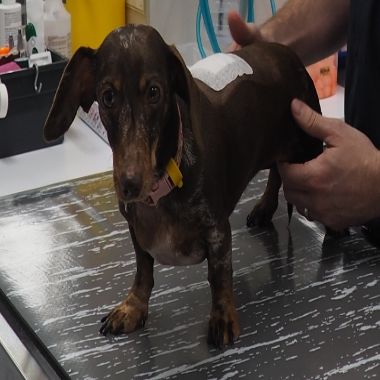
Spinal Disease In Dogs - The Uncommon Facts
Explore uncommon facts about spinal disease in dogs. Learn about sign and symptoms, pain management, treatment options, including surgery and conservative management.
Vestibular Disease in Dogs | Animal Referral & Emergency Network
Discover expert tips on treating older dogs with vestibular disease from the specialists at the Animal Referral & Emergency Network.
